 Save to Pinterest
 There's something about celeriac that sneaks up on you—I didn't appreciate it until a friend brought a bowl of this soup to a dinner party on a drizzly autumn evening, and I found myself asking for seconds before I'd even finished my first spoonful. The earthiness of roasted celeriac transformed into something almost buttery and refined, nothing like the humble vegetable it starts as. That crunch of hazelnut on top was the detail that made me realize how much texture matters, how a soup doesn't have to be just creamy and forgettable. I've made it dozens of times since, and it never fails to impress—or to remind me why I fell for it in the first place.
I made this for my partner on a night when we'd both had rough days, and somehow the act of roasting vegetables and toasting nuts felt meditative—the kitchen smelled so good that by the time we sat down to eat, the day had already shifted. There was nothing fancy about it, just two bowls and a bottle of wine, but that's when I understood that the best meals aren't always the most complicated ones.
Ingredients
- Celeriac (700 g): The star that deserves roasting; it becomes sweet and tender when caramelized, developing a nutty undertone that raw or boiled celeriac never achieves.
- Potato (150 g): Acts as a gentle thickener and adds subtle sweetness that balances the earthiness without overpowering it.
- Onion and garlic: The aromatic foundation that builds flavor quietly; don't skip the sauté step or you'll miss the depth they bring.
- Vegetable broth (900 ml): Use a good quality broth if you can; it makes a noticeable difference in the final flavor.
- Heavy cream (100 ml): Optional but worthwhile—it adds a silk that plant-based alternatives can match, though the taste shifts slightly.
- Hazelnuts (70 g): Toast them yourself rather than using pre-roasted; the fragrance and flavor are incomparably fresher when you toast them right before serving.
Tired of Takeout? 🥡
Get 10 meals you can make faster than delivery arrives. Seriously.
One email. No spam. Unsubscribe anytime.
Instructions
- Get Your Oven Ready:
- Preheat to 200°C so it's properly hot when your celeriac cubes are ready to go in; this matters more than you'd think for that golden caramelization.
- Roast the Celeriac:
- Toss your cubes with olive oil, salt, and pepper, then spread them on a baking tray and let them roast for 25–30 minutes, turning halfway through. You'll know they're done when they're soft inside and the edges catch some golden-brown color—this is where the magic happens.
- Build the Base:
- While celeriac roasts, heat olive oil in your pot and sauté the onion until it's soft and translucent, about 4 minutes. Add the garlic and potato, cooking just long enough for them to release their scent, then pause and breathe in.
- Combine Everything:
- Once the celeriac comes out of the oven, transfer it to the pot with the onion mixture. Pour in your vegetable broth and bring it to a gentle boil, then let it simmer for 15–20 minutes until all the vegetables are falling-apart tender. The kitchen will smell impossibly good at this point.
- Toast the Hazelnuts:
- While the soup simmers, put your chopped hazelnuts in a dry skillet over medium heat and listen for them to start crackling and releasing their aroma—this takes about 3–4 minutes. Add butter and sea salt, stirring until everything is golden and glistening, then set aside to cool slightly.
- Blend to Silky Perfection:
- Use your immersion blender to purée the soup until it's completely smooth and velvety, working in batches if using a countertop blender. Stir in cream if you're using it, then taste and adjust your seasoning—this is your chance to make it exactly right.
- Finish and Serve:
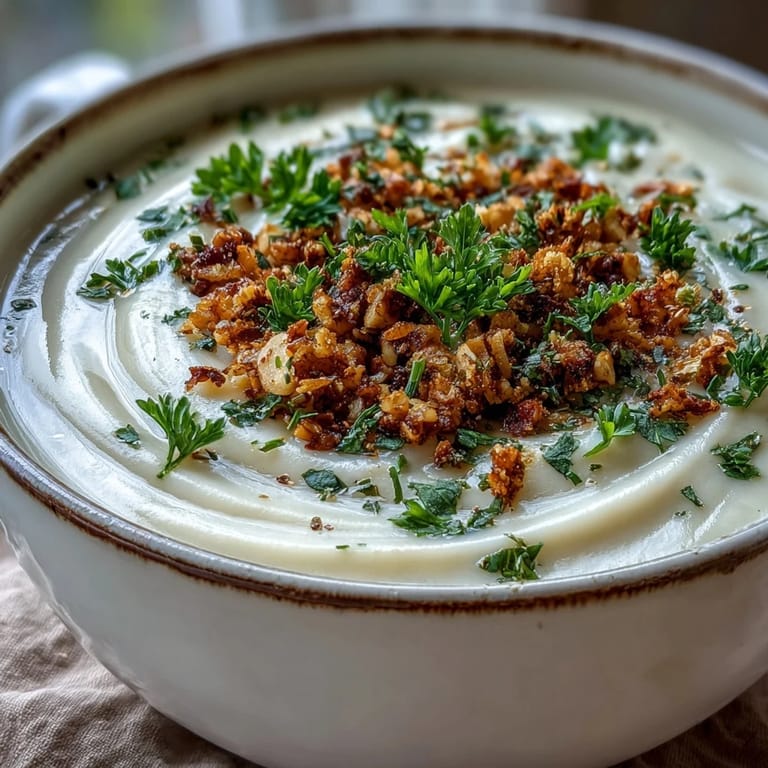
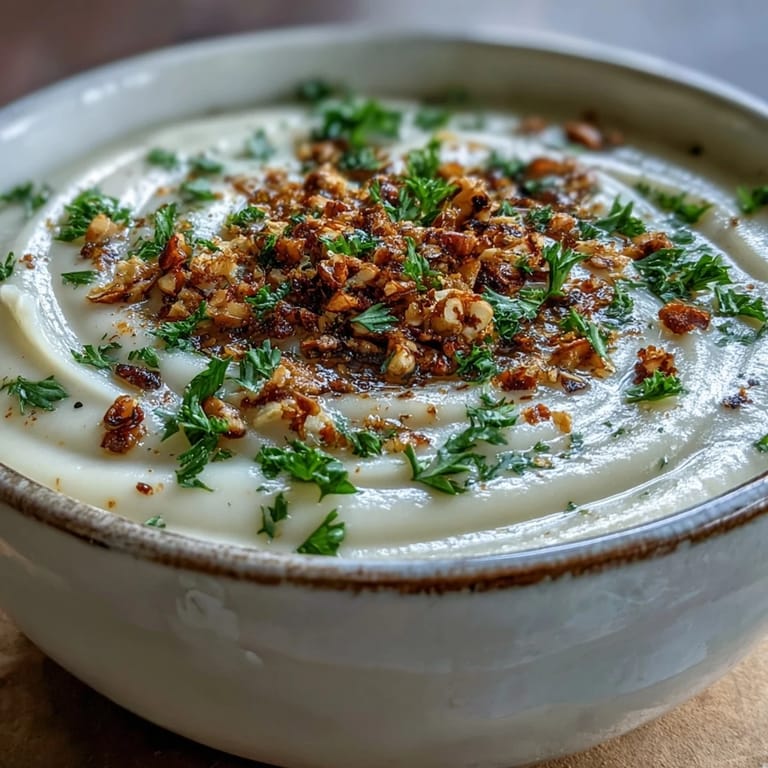
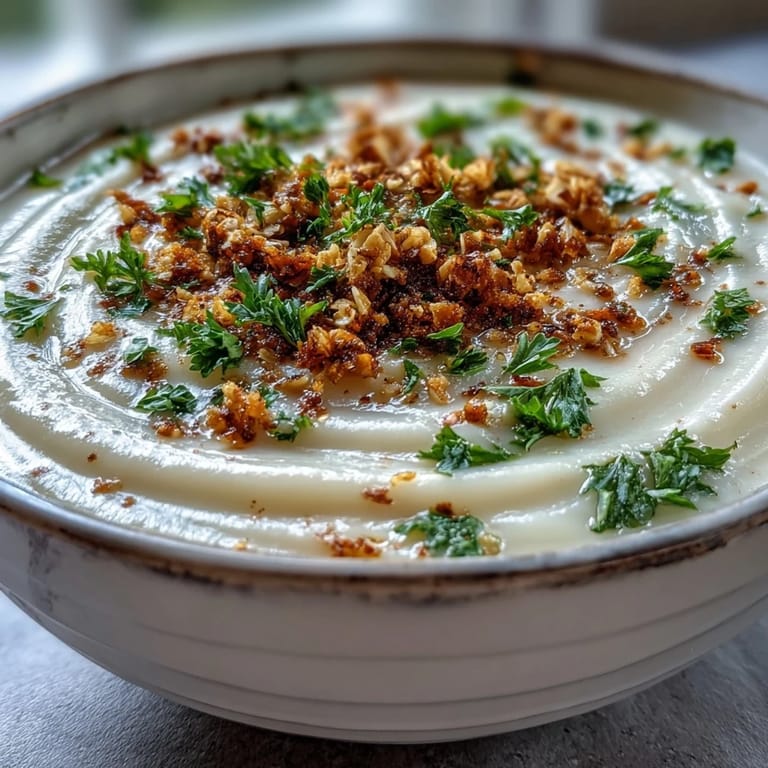
- Ladle the soup into bowls and top generously with your toasted hazelnut crumble and a scatter of fresh parsley. The crumble stays crisp on top while the soup steams underneath, giving you that textural moment with every spoonful.
 Save to Pinterest
 There was a moment last winter when a friend tasted this soup and told me it reminded her of a restaurant in Lyon her grandmother used to take her to—not because the recipes were the same, but because it felt like someone had cared about the details. That's what cooking is, sometimes: making people feel like they matter enough for you to roast vegetables instead of just boiling them.
The Power of Roasting
Roasting vegetables does something fundamental: it concentrates their natural sugars and creates browning reactions that add complexity you can't get from any other cooking method. With celeriac, this is especially true—the vegetable goes from neutral and slightly boring to almost honeyed, with a subtle nuttiness that pairs perfectly with the hazelnut crumble. I've experimented with raw celeriac in blenders and simmered celeriac, and neither compares. Once you understand this, you'll start roasting vegetables for soups instinctively.
Texture and Contrast
A smooth soup can be lovely, but smooth soup is easily forgotten because it offers your mouth nothing to do. The hazelnut crumble exists for a reason: it's the moment that makes you pause, the surprise that transforms a simple bowl into something memorable. This is a lesson that extends beyond soup—any dish benefits from thoughtful contrast, whether that's crispy against creamy, sweet against savory, or soft against crunchy.
Seasonal and Personal Variations
This soup is perfect as written, but it welcomes gentle additions if you're in the mood to play. A whisper of fresh thyme stirred in at the end brings an herbal note that feels almost autumn-forest-like, and a squeeze of lemon juice can brighten things up if your celeriac was particularly earthy. I've also experimented with swapping half the vegetable broth for apple cider—the sweetness echoes the roasted celeriac and feels festive without being obvious. The beauty is that you can make this the exact same way every time and it will be perfect, or you can use it as a foundation for your own small experiments.
- Fresh thyme or sage added during the final simmer brings herbaceous depth that feels natural to the dish.
- A squeeze of lemon or a pinch of nutmeg can brighten the earthiness if you prefer a lighter finish.
- Try toasted walnuts or almonds instead of hazelnuts if you're working with what you have on hand—each nut brings its own character to the crumble.
 Save to Pinterest
 This is the kind of soup that teaches you something about cooking if you're paying attention. Make it once and you'll understand why roasting matters; make it twice and you'll stop apologizing for serving 'just soup' to people you care about.
Recipe FAQs
- → What does celeriac taste like?
Celeriac offers a mild, celery-like flavor with subtle earthy sweetness and nutty undertones. Roasting intensifies these characteristics, creating depth that pairs beautifully with the toasted hazelnut topping.
- → Can I make this soup ahead?
Absolutely. The base purées beautifully and keeps refrigerated for 3-4 days. Store the hazelnut crumble separately at room temperature and add fresh when serving to maintain its irresistible crunch.
- → What if I can't find hazelnuts?
Toasted walnuts, pecans, or even pumpkin seeds work wonderfully as alternatives. Each brings its own nutty character that complements the earthy celeriac base while delivering that essential textural contrast.
- → Is the potato necessary?
The potato adds natural thickness and creamy body without dairy. For a lighter version, you can omit it, though the finished bowl may be slightly less velvety. An extra 200g of celeriac can substitute if preferred.
- → What should I serve alongside?
Crusty bread or simple crackers perfectly complement the smooth texture. A crisp green salad with vinaigrette balances the richness, while a dry white wine like Pinot Gris or Sauvignon Blanc echoes the earthy notes.
- → Can I freeze the leftovers?
Yes, the soup freezes exceptionally well for up to 3 months. Cool completely before transferring to airtight containers. Thaw overnight in the refrigerator and reheat gently, adding a splash of liquid if needed.