 Save to Pinterest
 My neighbor burst through my kitchen door one autumn evening with a steaming container of dhal, and I watched her face light up as she explained how the cumin-roasted cauliflower wasn't just a side—it was the whole point, the textural counterpart that made the creamy lentils sing. That night, I learned that sometimes the best dishes come from someone else's kitchen first, and then you make them your own by cooking them at three in the morning when you can't sleep because you're thinking about golden, crispy florets.
I made this for my sister during her first week living alone in a new city, when she called me saying she'd forgotten how to feed herself. Watching her savor that first spoonful of lentils topped with those golden florets, seeing her shoulders relax—that's when I realized comfort food isn't about complexity, it's about showing up with something warm and honest.
Ingredients
- Red lentils: They dissolve into a silky base faster than other varieties, and rinsing them first stops them from turning gluey—a lesson learned after one too many batches turned to paste.
- Coconut milk: The full-fat version creates that creamy richness that makes you feel like you're eating something luxurious, though you can thin it with light coconut milk if you prefer.
- Cumin seeds: Toasting them whole before grinding releases oils that make the whole dish taste deeper and more intentional.
- Fresh ginger: The sharpness cuts through the richness and prevents the dhal from feeling heavy, especially if you're eating this on a quiet night.
- Garam masala: This is the secret ingredient that makes people stop mid-bite and ask what they're tasting—it's warmth and complexity in a teaspoon.
- Cauliflower florets: Cut them bite-sized and relatively uniform so they roast evenly; uneven pieces leave you with both burnt edges and raw centers, which defeats the purpose.
- Olive oil: Use enough to coat the cauliflower generously, otherwise you'll end up with steamed florets instead of roasted ones.
Tired of Takeout? 🥡
Get 10 meals you can make faster than delivery arrives. Seriously.
One email. No spam. Unsubscribe anytime.
Instructions
- Set your oven up for cauliflower success:
- Preheat to 220°C (425°F) and line your tray with parchment paper so the cauliflower doesn't stick and so you have less to clean afterward. This temperature is hot enough to create that crucial contrast between crispy edges and tender centers.
- Build the cauliflower's flavor foundation:
- Toss your florets with olive oil, cumin seeds, turmeric, smoked paprika, salt, and pepper until every piece is coated. Spread them in a single layer and don't crowd the tray—if they're packed together, they steam instead of roast.
- Let the oven do its magic:
- Roast for 25–30 minutes, giving them a gentle turn halfway through so they brown evenly. You'll know they're ready when the edges are golden and crispy, with darker charred bits that taste almost nutty.
- Start the dhal base with seeds and aromatics:
- Heat coconut oil in a large pot over medium heat and add mustard seeds—listen for that satisfying sizzle and pop for about 30 seconds. Then add your finely chopped onion and let it soften for 4–5 minutes until it's translucent and sweet.
- Layer in the aromatics and spices:
- Add minced garlic, grated ginger, and green chili if you're using it, cooking for just a minute so the raw edge comes off. Then add your ground cumin, coriander, turmeric, and garam masala, stirring constantly for about a minute until the spices release their oils and your kitchen smells impossibly good.
- Bring it all together with the lentils:
- Add your rinsed red lentils, coconut milk, vegetable broth, and salt, then bring everything to a boil. Reduce the heat and let it simmer gently for 20–25 minutes, stirring occasionally so nothing sticks to the bottom.
- Know when your dhal is ready:
- The lentils should have completely softened into a creamy consistency—if it's too thick, add more broth or water a splash at a time. Taste it and adjust seasoning, then squeeze in your lemon juice at the very end to brighten everything up.
- Come together at the finish:
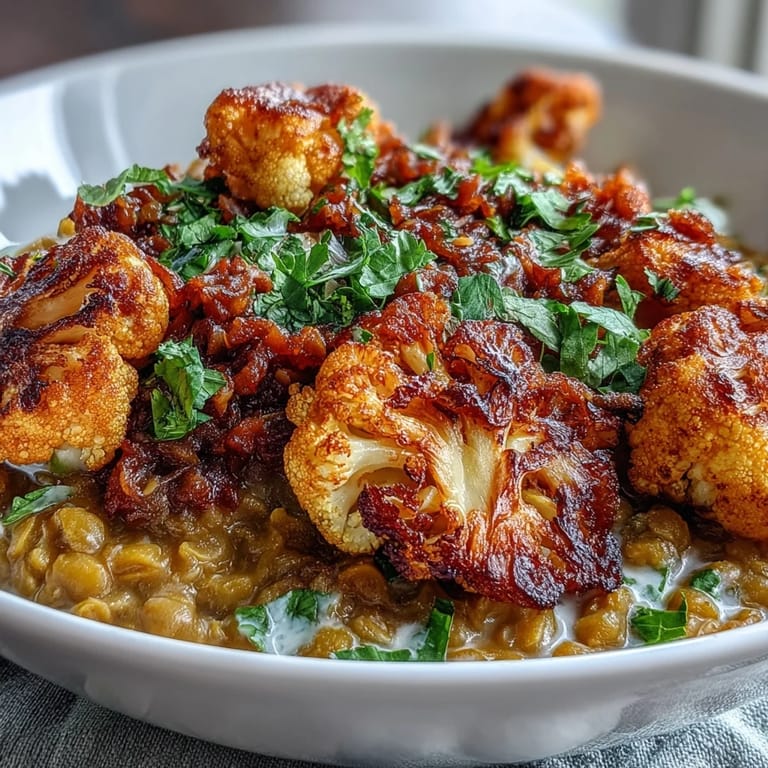
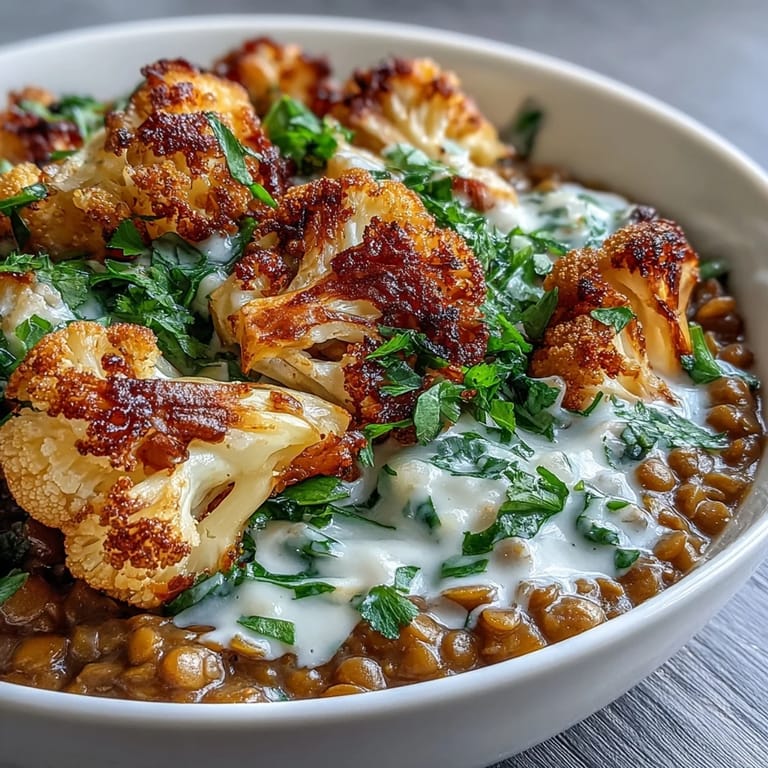
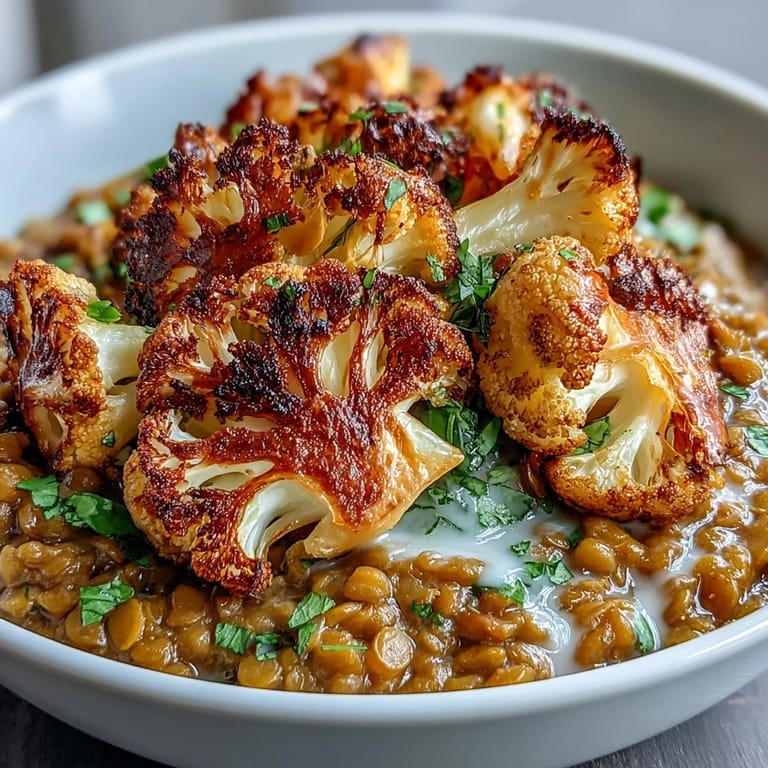
- Pour your dhal into bowls and crown each one with those golden roasted cauliflower florets and a generous handful of fresh cilantro. The contrast between the warm, smooth dhal and the crispy, textured cauliflower is exactly why this dish works.
 Save to Pinterest
 There's a moment when you're standing at the stove, smelling that bloom of toasted spices, when you realize you're not just making dinner—you're creating something that will become someone's comfort meal, their go-to when they need warmth. That's what happened for me with this dhal, and I suspect it will happen for you too.
The Science Behind the Crispy Cauliflower
Roasting at high heat creates something called the Maillard reaction, which is fancy chemistry speak for why those florets turn golden instead of just pale and soft. The key is spreading them out so they can kiss the hot tray directly—crowded vegetables steam instead of brown, and that's the difference between something memorable and something forgettable.
Making This Meal Your Own
I've made this recipe with cashew cream instead of coconut milk when someone had a nut allergy, and I've stirred in handfuls of spinach at the end because I had it sitting in my fridge. The dhal is forgiving enough to handle your creativity without falling apart, which is why it's become my go-to when I'm cooking for people with different preferences or dietary needs.
Serving Suggestions and Next Steps
Serve this with basmati rice or warm naan to make it a complete meal, or eat it on its own if you're in the mood for something lighter. Some nights I top it with toasted cashews or pumpkin seeds for extra crunch, and on other nights I just let the roasted cauliflower be the star.
- Toast your cashews or seeds in a dry pan for a couple of minutes before scattering them on top so they're crunchy and fragrant instead of soft.
- Make the dhal up to two days ahead and reheat it gently on the stove with a splash of water—the flavors actually deepen as they sit.
- Roast your cauliflower fresh on the day you're serving so it stays crispy; if it sits around it loses that textural magic that makes the dish work.
 Save to Pinterest
 This dhal has become the meal I make when someone needs feeding, when I'm cooking for myself on a quiet night, or when I want to prove to someone that plant-based eating isn't a limitation—it's just another way to feed yourself with warmth and intention. Make it tonight, and tomorrow you'll be making it again.
Recipe FAQs
- → What makes this dhal creamy?
The combination of coconut milk and properly simmered red lentils creates a naturally creamy texture without any dairy. Red lentils break down beautifully during cooking, thickening the dhal while maintaining a smooth consistency.
- → Can I use other vegetables instead of cauliflower?
Absolutely. Roasted sweet potato cubes, butternut squash, or even broccoli work wonderfully with the same spice blend. Just adjust roasting time as needed for different vegetables.
- → Is this dish freezer-friendly?
Yes, both the dhal and roasted cauliflower freeze well. Store them separately in airtight containers for up to 3 months. Reheat gently on the stove and refresh roasted cauliflower in a hot oven to restore crispness.
- → How spicy is this dhal?
The heat level is mild to medium, adjustable based on your preference. The green chili is optional, and you can reduce or omit it for a milder version. The warming spices provide flavor without excessive heat.
- → What's the best way to serve this?
Serve over fluffy basmati rice or with warm naan bread for soaking up the creamy dhal. A side of cucumber raita and some pickled onions make excellent accompaniments that complement the rich flavors.
- → Can I make this with green or brown lentils?
Red lentils are ideal because they cook quickly and soften nicely. Green or brown lentils hold their shape better and require longer cooking time. If substituting, expect a different texture and add 15-20 minutes to simmering time.