 Save to Pinterest
 My sister called me three days before Mother's Day in a mild panic—she'd promised to bring dessert but had nothing planned. I found myself volunteering to make pavlova, a dessert I'd only admired from afar, thinking it must be impossibly difficult. Standing in my kitchen that afternoon with egg whites and a whisk, I discovered something unexpected: the magic wasn't in complexity but in patience and a little bit of respect for humidity. Now, years later, this pavlova has become the dessert I turn to whenever I want to feel like I've accomplished something spectacular without actually breaking a sweat.
I remember my mom's face when she saw this pavlova sitting on our dining table that Mother's Day—not because it looked fancy, but because she recognized the effort behind something she'd always ordered from bakeries. We ate it outside on the patio with coffee, and somehow a simple dessert turned into three hours of conversation about nothing important. That's when I understood pavlova isn't really about impressing anyone; it's about taking time to create something delicate for people you love.
Ingredients
- Egg whites (4 large, room temperature): Cold eggs won't whip properly, so let them sit on the counter for 20 minutes—this small step makes a real difference in how quickly they reach stiff peaks.
- Superfine sugar (1 cup): Regular sugar works, but superfine dissolves faster and gives you that glossy, smooth meringue texture that's essential for the final result.
- Cornstarch (1 tsp): This is your secret weapon for keeping the inside marshmallow-soft while the outside stays crispy—don't skip it.
- White vinegar (1 tsp): It stabilizes the meringue and helps prevent weeping, which means you won't end up with a pool of liquid at the bottom.
- Vanilla extract (1 tsp): Pure vanilla matters here because it adds real flavor depth without the chemical aftertaste of imitation versions.
- Salt (pinch): Brings out the sweetness and prevents the meringue from tasting one-dimensional.
- Heavy whipping cream (1 cup, chilled): Cold cream whips faster and holds its shape better, so actually take the time to chill it beforehand.
- Powdered sugar (2 tbsp for cream, plus optional dust): Adds sweetness without the grittiness of regular sugar, keeping the topping smooth.
- Mixed berries (4 cups total): Use whatever looks best at your market—strawberries, raspberries, blueberries, and blackberries create a beautiful, colorful crown.
- Fresh mint (optional): A small handful adds a surprising brightness that cuts through the sweetness perfectly.
Tired of Takeout? 🥡
Get 10 meals you can make faster than delivery arrives. Seriously.
One email. No spam. Unsubscribe anytime.
Instructions
- Prepare your space and preheat:
- Set your oven to 250°F and line a baking sheet with parchment paper, then lightly trace a 9-inch circle as your guide. This low, slow heat is what creates that signature crispy-outside-marshmallow-inside texture.
- Beat the egg whites:
- In a scrupulously clean, dry bowl, start beating the egg whites with a tiny pinch of salt—any trace of yolk or moisture will sabotage everything, so wash your bowl with hot soapy water first if you're nervous. Once soft peaks form, you're ready to add sugar.
- Add sugar gradually and beat:
- Add the superfine sugar one tablespoon at a time while beating constantly, which takes about 5-6 minutes total. You'll watch the mixture transform from foamy to glossy to stiff peaks—when you lift the beaters and the peaks stand straight up without drooping, you're done.
- Fold in the secret ingredients:
- Gently fold in the cornstarch, vinegar, and vanilla extract with a spatula, being careful not to deflate all those air bubbles you've worked so hard to create. This is a moment for tenderness, not vigor.
- Shape and bake:
- Spoon the meringue onto your parchment circle and use the back of a spatula to create a nest shape with slightly raised edges—the indentation in the center is where the whipped cream will eventually sit. Slide it into the oven for 1 hour 15 minutes; it should look pale and crispy when done.
- Cool slowly:
- Turn off the oven and crack the door open just slightly, then let the pavlova cool inside for at least an hour—this gradual temperature change prevents cracking. Patience here really does make a difference.
- Make the whipped cream:
- While the pavlova cools, whip your chilled heavy cream with powdered sugar and vanilla until soft peaks form, which takes about 2-3 minutes with an electric mixer. Don't over-whip or you'll end up with butter, which is a lesson I learned the hard way.
- Assemble right before serving:
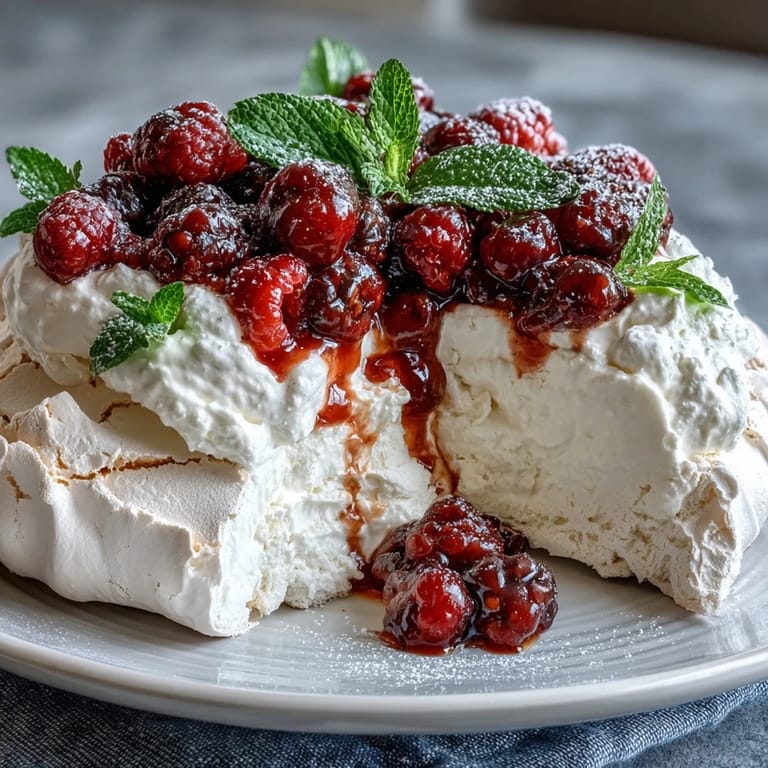
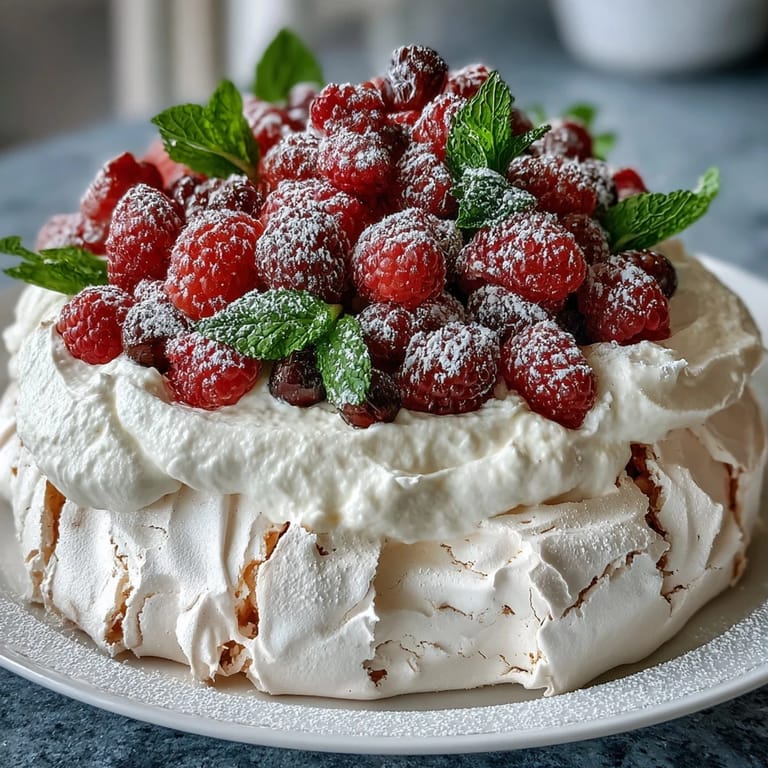
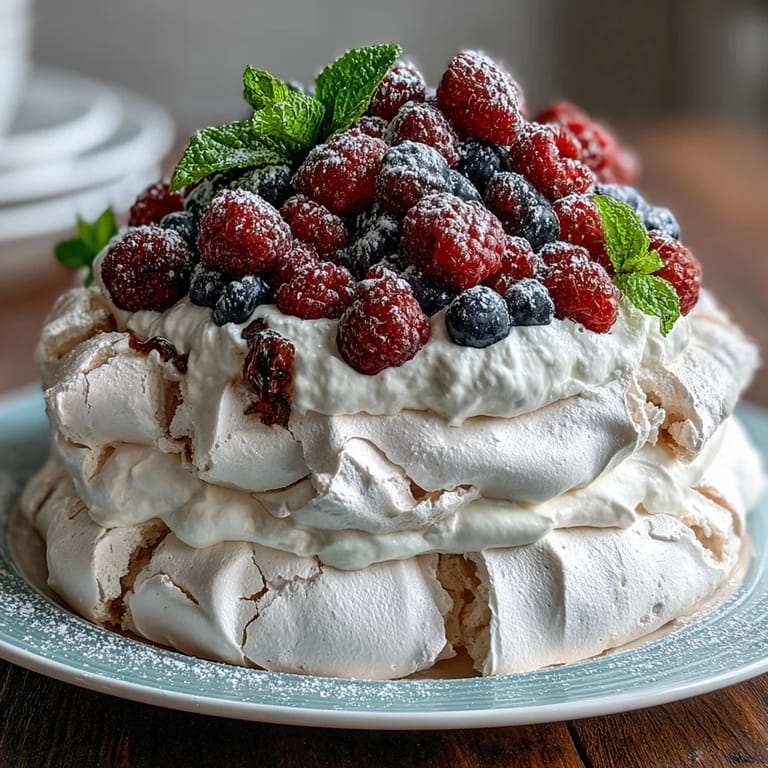
- Transfer your cooled pavlova to a serving platter, top generously with whipped cream, then arrange your fresh berries in whatever pattern makes you happy. A light dusting of powdered sugar and a few mint leaves add the final touch.
 Save to Pinterest
 There's something almost magical about the moment you crack into a pavlova for the first time—that satisfying crunch followed by the pillowy sweetness inside. I've made this dessert for birthdays, anniversaries, and random Sundays when I wanted to feel like I'd done something special, and it never fails to turn a simple meal into an occasion.
The Science Behind the Crunch
Meringue works because of protein chemistry—the egg whites are basically captured air surrounded by protein molecules that stabilize everything. The vinegar helps set the proteins, the sugar adds stability and sweetness, and the low oven temperature allows the moisture to evaporate slowly without cooking the inside. Understanding this won't change how you make it, but it might help you feel less anxious about the process because you'll know exactly what's supposed to be happening inside that oven.
Seasonal Variations Worth Trying
Once you master the basic pavlova, you'll start seeing possibilities everywhere—swap berries for stone fruits in late summer, add passion fruit pulp for tropical flair, or try citrus curd mixed into the whipped cream instead of plain vanilla. I've made versions with crushed pistachios folded into the meringue, chocolate shavings scattered on top, and even a lavender-infused whipped cream when I was feeling adventurous. The pavlova base is honestly just a blank canvas waiting for whatever your season or mood demands.
Troubleshooting and Storage
If your pavlova cracks when you transfer it, don't panic—just crack it into pieces, layer them in a bowl with whipped cream and berries, and call it a Pavlova Mess, which honestly tastes just as good. Store the unfilled meringue shell in an airtight container for up to three days, and assemble everything on the day you're serving. The whole finished dessert is best eaten within a few hours of assembly, which is rarely a problem because everyone eats it immediately.
- If weeping occurs (liquid pooling under the meringue), it means humidity got the better of you, but the taste is still perfect—just eat it sooner rather than later.
- Make sure your mixer bowl is completely grease-free before beating egg whites, because even a tiny amount of oil prevents them from reaching full volume.
- Bring eggs to room temperature by sitting them in warm water for a few minutes, not by leaving them out, because this is faster and more reliable.
 Save to Pinterest
 Making pavlova taught me that some of the best-looking desserts aren't actually that complicated—they just need respect for timing and a willingness to do things slowly. Serve this to someone you care about, and watch how something as simple as berries on whipped cream becomes a moment worth remembering.
Recipe FAQs
- → How do I achieve a crisp meringue shell with a soft center?
Whip egg whites to stiff peaks and bake the meringue at low temperature for over an hour. Cooling it slowly inside the oven helps maintain the soft middle.
- → Can I substitute the mixed berries with other fruits?
Yes, seasonal fruits such as kiwi, peaches, or passionfruit work well as flavorful alternatives.
- → Why is vinegar added to the meringue mixture?
Vinegar stabilizes the egg whites and helps create a tender, marshmallow-like center inside the meringue.
- → How should I whip the cream for topping?
Chill heavy cream and beat with powdered sugar and vanilla extract until soft peaks form for a light and fluffy texture.
- → Is this dessert suitable for gluten-free diets?
Yes, the pavlova uses no flour and is naturally gluten-free.
- → Any tips for preventing meringue cracking?
Allow the pavlova to cool slowly with the oven door slightly open to avoid sudden temperature changes that cause cracks.