 Save to Pinterest
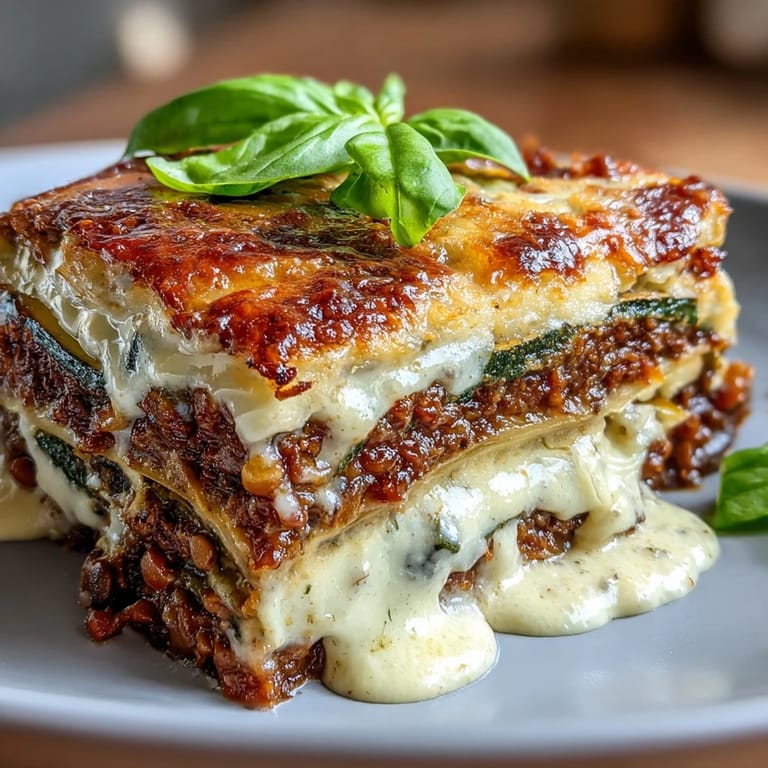
 One rainy Tuesday, I stood in my kitchen staring at a half-empty vegetable drawer and a craving for lasagne that felt almost urgent. The problem was simple: I didn't want to fuss with boiling sheets or juggling three separate pans like some kind of culinary acrobat. So I grabbed my biggest ovenproof skillet, threw in everything at once, and discovered something magical happens when you let lentils do the heavy lifting instead of just meat. That pan became my new favorite thing, and this recipe has lived there ever since.
My partner once brought his very skeptical meat-loving friend over, the type who makes those knowing smirks at vegetarian mains. Twenty minutes into eating, that friend was scraping his plate clean and asking for the recipe. I remember the exact moment his expression shifted, right around when he realized those weren't ground mushrooms doing some sad impersonation of meat, but actual layers of vegetables and lentils that had somehow become something entirely their own and deeply satisfying.
Ingredients
- Olive oil: Use good quality here since it's the foundation of your soffritto—it carries the whole flavor profile forward.
- Onion and garlic: Always mince your garlic rather than crushing it for this dish; it distributes more evenly through the sauce.
- Carrot, red bell pepper, mushrooms, and courgettes: The vegetable base should be diced consistently so they cook at the same pace and create texture rather than mush.
- Smoked paprika: This is non-negotiable; regular paprika won't give you that signature smoky depth that makes people ask what your secret ingredient is.
- Dried oregano and thyme: Don't skimp on the dried herbs here—they're essential to the Italian-inspired backbone of the dish.
- Tomato paste: This concentrates tomato flavor and adds body to your sauce without extra liquid.
- Chopped tomatoes: Canned is perfectly fine and honestly more reliable than fresh for this application.
- Soy sauce: A tablespoon adds umami depth that makes the vegetables taste more substantial and rounded.
- Red lentils: Rinse them thoroughly before using; they cook down quickly and create that naturally creamy texture.
- Vegetable stock: This balances the acidity of the tomatoes and creates the right sauce consistency.
- Butter and flour: Your béchamel base—make sure you cook the flour for a minute before adding milk to remove any raw taste.
- Whole milk: Whole milk gives you the richness you need; skimmed will taste thinner no matter how patient you are.
- Mature cheddar: The aged variety has more complexity than young cheddar and melts more smoothly into the sauce.
- No-boil lasagne sheets: These are genuine time-savers; they soften perfectly in the oven without the faffing about of boiling.
- Mozzarella for topping: This browns beautifully and gives you that golden, slightly crispy top layer.
Tired of Takeout? 🥡
Get 10 meals you can make faster than delivery arrives. Seriously.
One email. No spam. Unsubscribe anytime.
Instructions
- Get your oven ready:
- Preheat to 200°C (180°C fan). This temperature is hot enough to cook your lasagne through without drying out the béchamel.
- Start your vegetable foundation:
- Heat olive oil in your large ovenproof pan over medium heat, then soften the onion and garlic for about 2 minutes until they're fragrant and translucent. You'll know it's right when your kitchen starts smelling like someone's about to make something proper.
- Build the vegetable layer:
- Add carrot, pepper, mushrooms, and courgettes, cooking for 5-6 minutes until they've softened but still hold their shape. Stir them occasionally so they color slightly and develop flavor.
- Toast your spices:
- Stir in smoked paprika, oregano, thyme, chili flakes if using, and tomato paste. Cook for just 1 minute—this releases the oils in the spices and deepens their flavor dramatically.
- Simmer your lentil sauce:
- Add tomatoes, soy sauce, rinsed lentils, and vegetable stock. Bring to a gentle simmer, cover loosely, and let it bubble away for 15-20 minutes, stirring occasionally. You'll see the lentils gradually soften and the sauce thicken into something rich and deeply savory. Taste and adjust seasoning with salt and pepper.
- Make your béchamel while the lentils cook:
- In a separate saucepan, melt butter over medium heat. Stir in flour and cook for 1 minute, stirring constantly so you break up any lumps. Gradually pour in milk while whisking—the constant motion prevents lumps from forming. Once all the milk is in, keep stirring for about 5 minutes until the sauce thickens enough to coat the back of a spoon. Remove from heat and stir in nutmeg, cheese, salt, and white pepper.
- Begin your layering:
- Once your lentil sauce is ready, remove roughly half of it from the pan and set aside. Spread one-third of your béchamel over the remaining sauce in the pan, then break lasagne sheets to fit on top in a single layer.
- Build your second layer:
- Spread half your reserved lentil bolognese over the pasta, pour another third of béchamel over that, and lay down another layer of lasagne sheets, breaking them to fit snugly.
- Finish with the top layer:
- Spread remaining bolognese over the pasta, top with final lasagne sheets, and pour over the last of your béchamel. Sprinkle mozzarella generously over everything.
- Bake covered then uncovered:
- Cover the pan loosely with foil and bake for 25 minutes so the pasta can absorb moisture without the top drying out. Remove the foil and bake another 10-15 minutes until the cheese is golden and bubbling at the edges.
- Rest before serving:
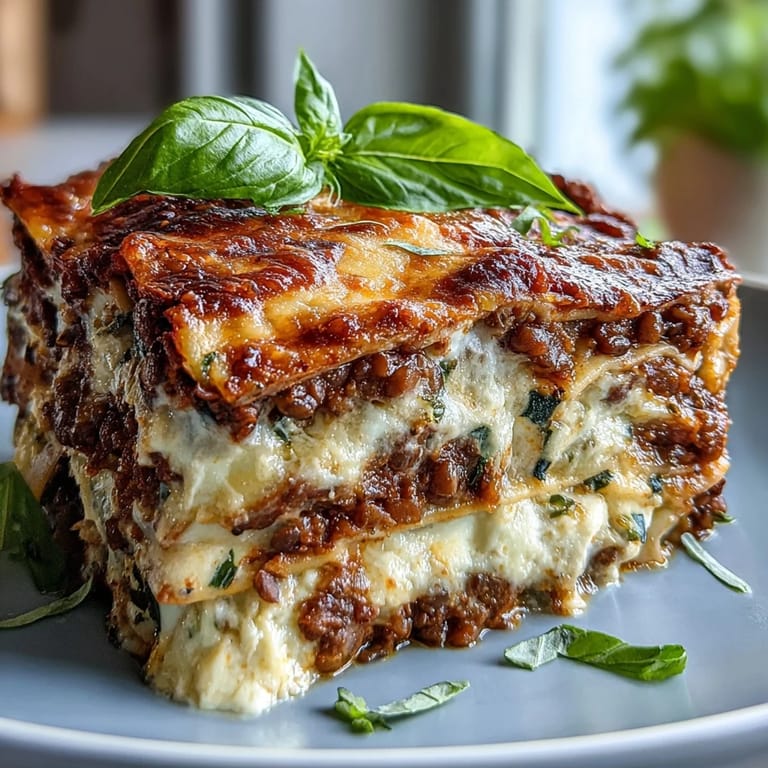
- Let the pan sit for 10 minutes after coming out of the oven—this allows the layers to set slightly so they won't collapse when you serve. A scatter of fresh basil makes a lovely finish if you have it.
 Save to Pinterest
 There's a moment about halfway through baking when you peek under the foil and the kitchen is filled with this incredible smell—earthy lentils, caramelized vegetables, nutmeg-scented cream—and you realize you've made something that tastes like comfort and care. That's the moment I know I've nailed it.
The Magic of One-Pan Cooking
Using an ovenproof pan is genuinely transformative here because your sauce builds directly in the pan where it'll finish cooking, which means all those browned bits and concentrated flavors stay right there in your dish. There's no transferring, no losing anything to another vessel—what you've cooked is what you're serving. This approach also means the bottom layers get a gentle, continued heat exposure as everything bakes together, which creates a more integrated final dish than traditional separate-component lasagne.
Why Red Lentils Work Better Than You'd Expect
Red lentils break down into a silky texture as they cook, almost naturally emulsifying into the sauce rather than staying separate like chunky vegetables would. This creates that satisfying, substantial mouthfeel that makes people forget they're eating something vegetarian. The umami from the soy sauce and the depth from smoked paprika and tomato paste work together with the lentils to build a flavor profile that genuinely rivals traditional meat-based versions, but in a way that feels honest and celebratory rather than mimicking.
Making It Your Own
I've made this recipe probably thirty times now, and I'm always tinkering at the edges to suit what I have and what I'm craving. Some nights I add a splash of red wine right after the tomato paste, letting it bubble down for a minute before adding the rest. Other times I sneak in fresh spinach at the very end, stirring it through the lentil mixture while it's still hot so it wilts into the sauce. A friend of mine adds a pinch of cinnamon, which sounds strange until you taste how it deepens the savory notes without making anything taste sweet.
- A splash of good red wine adds complexity and acidity that rounds out the richness of the sauce.
- Fresh spinach stirred in at the end adds nutrition without changing the dish's essential character.
- Don't be afraid to adjust the vegetable ratios based on what you have on hand—this recipe is flexible enough to handle substitutions.
 Save to Pinterest
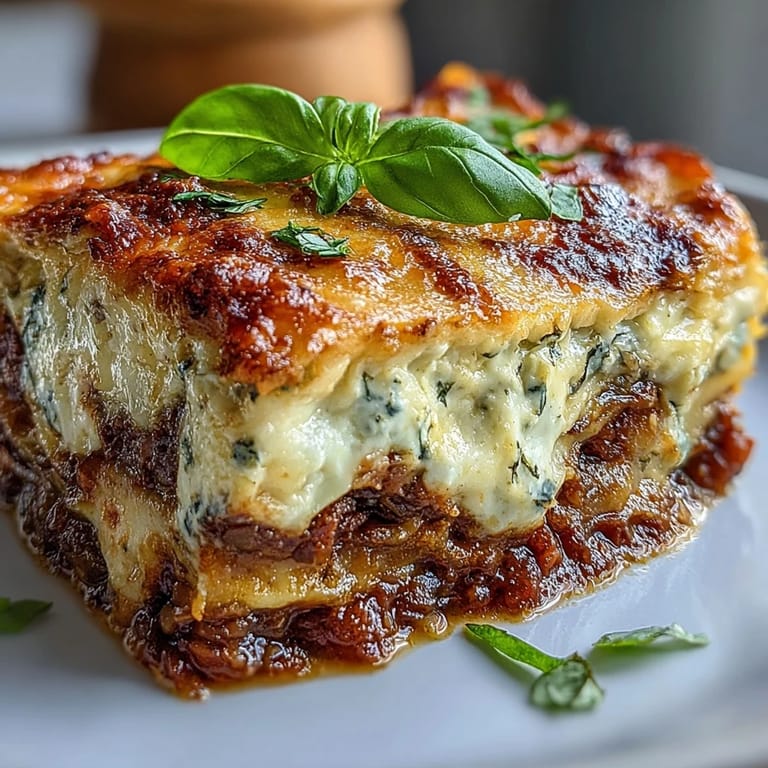
 This lasagne has become the dish I make when I want to feed people something that feels special without spending all day in the kitchen. It's honest food that doesn't apologize for being vegetarian.
Recipe FAQs
- → Can I make this dish ahead of time?
Absolutely. Assemble the complete dish up to 24 hours ahead, cover tightly, and refrigerate. Add an extra 10-15 minutes to the baking time if cooking from cold.
- → What type of lentils work best?
Red lentils are ideal as they break down nicely during cooking, creating a thick, hearty texture. Brown or green lentils hold their shape better but work fine if you prefer more texture.
- → Can I freeze the leftovers?
Yes, this freezes beautifully. Cut into portions, wrap well, and freeze for up to 3 months. Thaw overnight in the refrigerator and reheat in the oven until piping hot throughout.
- → What can I serve alongside?
A crisp green salad with vinaigrette balances the richness perfectly. Garlic bread, roasted vegetables, or steamed green beans also make excellent accompaniments.
- → How do I know when it's done?
The dish is ready when the cheese is golden and bubbling, and a knife inserted into the center feels little resistance when piercing the pasta layers.
- → Can I add different vegetables?
Certainly. Spinach, eggplant, or butternut squash work wonderfully. Just ensure any vegetables with high water content are precooked to prevent excess moisture.