 Save to Pinterest
 My kitchen filled with the smell of roasting squash on a gray November afternoon, and I realized I'd been making the same soup all season without thinking much about it. Then a friend asked what made mine different, and I had to pause—the answer was those warming spices hitting the pan at just the right moment, creating something that felt more intentional than routine. That's when this soup stopped being just something to make on a Tuesday and became the thing I actually looked forward to eating.
I made this for my sister during her first winter in a new apartment, when she called saying the place felt too empty and cold. We simmered this together while she unpacked boxes, and by the time it was ready, the whole place smelled like home. She's made it at least a dozen times since, always with that same lemon juice and cilantro finish, which somehow became her signature move.
Ingredients
- Butternut squash: The backbone of this soup—roasting it first deepens the sweetness and gives you those caramelized edges that make everything taste richer than it actually is.
- Red lentils: These are the magic ingredient that dissolves into silk; yellow ones work too, but red lentils break down faster and create that velvety texture everyone loves.
- Carrots and onion: The flavor foundation—don't skip the sautéing step because that's where they start releasing their sweetness before everything combines.
- Garlic: A quick minute in the pan is all it needs; any longer and it turns bitter, which I learned the hard way on a Tuesday night when I wasn't paying attention.
- Ground cumin, coriander, turmeric, cinnamon, and smoked paprika: This spice blend is warming without being aggressive—turmeric gives you those anti-inflammatory benefits everyone talks about, and the cinnamon adds a subtle sweetness that balances the earthiness.
- Vegetable broth: Good broth makes a difference here; I use the low-sodium kind and adjust seasoning myself because it gives me more control over the final taste.
- Olive oil: Two tablespoons split between the squash and the base—it's enough to get things golden without making the soup heavy.
- Lemon juice: This comes at the end and brightens everything; it's the difference between a soup that tastes complete and one that tastes like it's missing something.
Tired of Takeout? 🥡
Get 10 meals you can make faster than delivery arrives. Seriously.
One email. No spam. Unsubscribe anytime.
Instructions
- Get your squash roasting:
- Preheat the oven to 400°F and toss your cubed squash with a tablespoon of olive oil, salt, and pepper. Spread it on parchment paper and let it roast for 25 to 30 minutes until the edges are golden and the pieces feel tender when you press them—this is where the sweetness deepens.
- Build your flavor base:
- While the squash roasts, warm the remaining olive oil in a large pot and add the chopped onion and carrots, letting them soften for about five minutes over medium heat. Add the minced garlic and cook just until it becomes fragrant—maybe another minute—then you're ready for the spices.
- Toast the spices:
- Stir in the cumin, coriander, turmeric, cinnamon, and smoked paprika, cooking for just 30 seconds until the kitchen smells like warmth and comfort. This quick toast awakens the spices and distributes their flavor throughout the oil.
- Bring it together:
- Add the roasted squash, rinsed red lentils, vegetable broth, and water to the pot, then bring everything to a boil. Reduce the heat and let it simmer uncovered for about 20 minutes until the lentils have completely softened and started breaking apart.
- Create the silk:
- Remove the pot from heat and use an immersion blender to puree the soup until it's smooth and velvety—if you're using a regular blender, work in careful batches and hold the lid slightly ajar to let steam escape. This is the step that transforms chunky ingredients into something luxurious.
- Finish and serve:
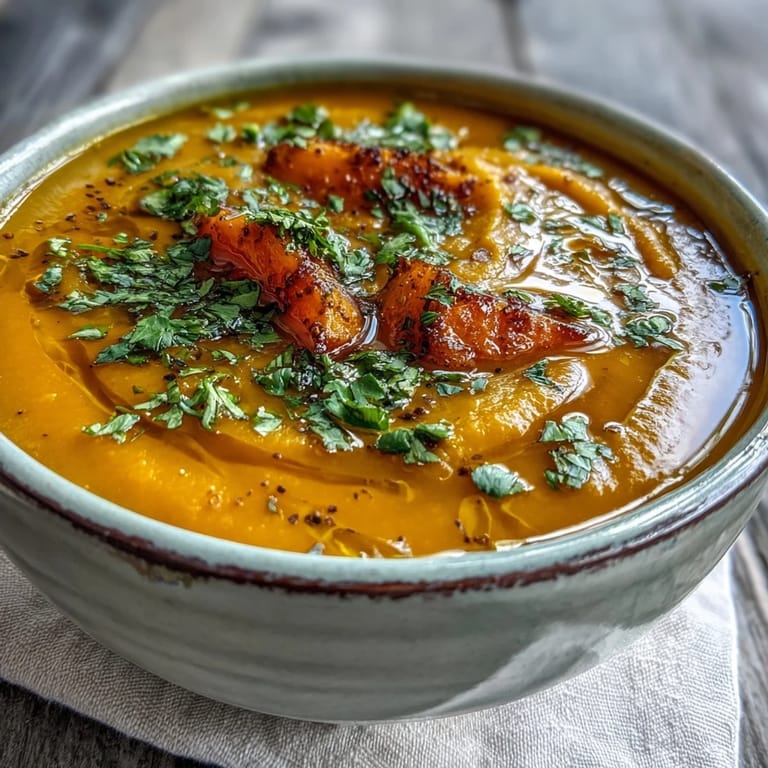
- Stir in the lemon juice, taste for seasoning, and adjust with salt and pepper to your preference. Ladle into bowls and top with fresh cilantro or parsley if you want that brightness and color.
 Save to Pinterest
 There's something about serving this soup in the evening when the weather turns cold, when people's shoulders relax a little knowing they're about to eat something warm and thoughtful. It stopped being just soup and became the thing that makes people feel taken care of.
Why This Soup Works Year-Round
The beauty of this soup is that it adapts to whatever season you're in—in fall it feels like comfort, in winter it becomes a warming ritual, and in spring it can be lightened with a bit of fresh ginger or served slightly cooler if that's what the day calls for. The spice blend doesn't feel seasonal because these particular flavors work against any kind of cold or heaviness. I've made it in June for people recovering from illness and in January for people just needing something grounding, and it never feels out of place.
Making It Creamier or Lighter
If you want more richness, stir in a quarter cup of coconut milk before blending—it adds a subtle sweetness and makes the soup feel more indulgent without overwhelming the spices. On the flip side, if you want it lighter, you can reduce the broth slightly or add more water and let the lentils and squash do the work of thickening it on their own. I've done both depending on my mood and what else is on the table, and honestly, both versions are equally good.
Variations and Serving Ideas
Yellow lentils will work if you prefer them, though they break down slightly faster than red ones. You can add grated fresh ginger along with the garlic if you want an extra layer of warmth and digestive support. Serve it with crusty bread for soaking up every last spoonful, or offer a dollop of yogurt on the side for those who aren't vegan—the cool creaminess against the warm spices is a perfect contrast.
- Fresh cilantro or parsley on top adds brightness and makes each bowl feel special.
- A squeeze of extra lemon at the table lets people adjust the brightness to their taste.
- Leftover soup keeps for three days in the refrigerator and actually tastes better as the flavors meld together overnight.
 Save to Pinterest
 This soup became my answer to almost everything—when someone needed comfort, when I needed to feel like I was taking care of myself, when the weather demanded something warm. It's reliable and it's real, which is honestly all any of us want from a good bowl of soup.
Recipe FAQs
- → Can I make this soup ahead of time?
Yes, this soup actually tastes better the next day as flavors have time to meld. Store in an airtight container in the refrigerator for up to 4 days. Reheat gently on the stovetet, adding a splash of water or broth if needed to adjust consistency.
- → Can I freeze butternut squash lentil soup?
Absolutely. This soup freezes beautifully for up to 3 months. Let it cool completely before transferring to freezer-safe containers, leaving about an inch of space for expansion. Thaw overnight in the refrigerator before reheating.
- → Do I need to peel the butternut squash?
Yes, the skin becomes tough when cooked and won't blend smoothly. Use a sharp vegetable peeler or chef's knife to remove the skin before cubing. If roasting first, the peel comes off more easily after cooking if you prefer that method.
- → Can I use other types of lentils?
Red lentils work best because they break down completely and create a smooth texture. Yellow lentils are a good substitute with similar results. Brown or green lentils hold their shape and won't puree as smoothly, so the final texture will be chunkier.
- → What can I serve with this soup?
Crusty gluten-free bread is perfect for dipping. A side salad with tangy vinaigrette balances the richness. For extra protein, top with toasted pumpkin seeds or a dollop of Greek yogurt if not vegan. The soup is substantial enough to stand alone as a main course.
- → How do I adjust the seasoning?
Taste after blending and before adding lemon juice. Start with salt and pepper, then add more spices if needed. The lemon juice is crucial for brightness—add gradually until the flavors pop. If too thick, thin with more broth or water.