 Save to Pinterest
 My friend texted me three days before her daughter's graduation asking if I could help make the fruit display, and honestly, I panicked—then realized this was the perfect excuse to go a little wild with color and creativity. Standing in the produce section that morning, I found myself arranging imaginary fruit towers in my head, picking up berries and putting them back, suddenly aware that a good fruit table isn't just about throwing things on a board. It's about making people feel celebrated before they even take a bite.
I remember setting up that fruit table about an hour before guests arrived, and my friend's mom walked in, stopped cold, and just said "wow" without moving for a solid ten seconds. That moment made me realize this wasn't just food—it was a small, colorful declaration that we'd taken time to make something beautiful for people we cared about.
Ingredients
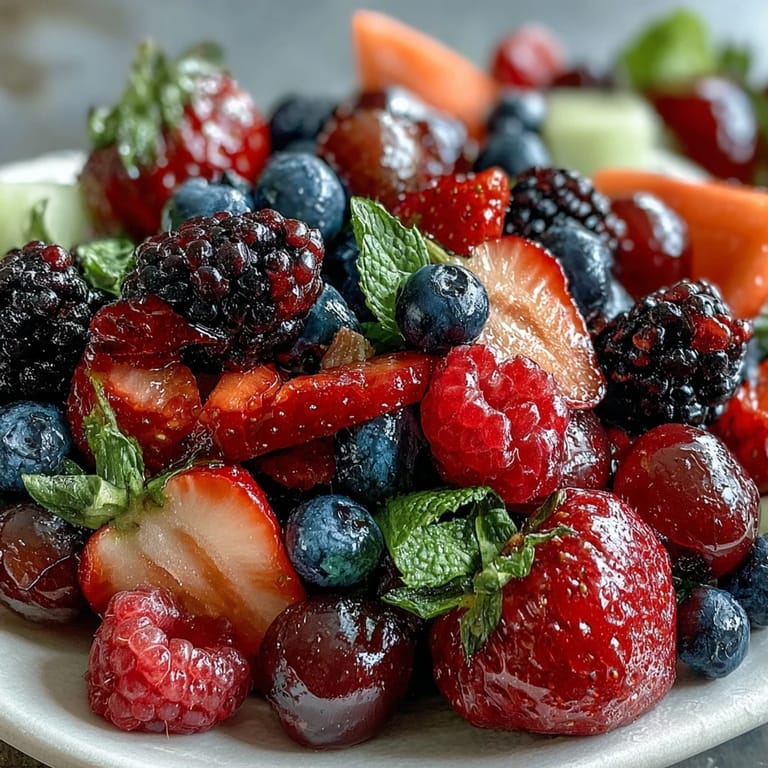
- Seedless green grapes: These hold their shape beautifully and roll into the little gaps between other fruits, creating natural flow on your board.
- Seedless red or black grapes: The color contrast is everything—they make the greens look even brighter.
- Strawberries, hulled and halved: Buy them a day ahead if possible; they're less likely to weep juice if given time to settle.
- Pineapple, bite-sized pieces: Fresh pineapple adds tartness and keeps people reaching for more instead of feeling like they're just eating candy.
- Watermelon, wedges or balls: A melon baller makes these look intentional and fancy, but honestly, clean wedges work just as well.
- Cantaloupe, wedges or balls: The pale orange is a quiet hero—it makes the reds and purples pop without demanding attention.
- Blueberries: These tuck into crevices and feel like little treasures scattered across the table.
- Raspberries: Handle gently because they bruise if you look at them wrong, but their delicate texture is worth the care.
- Kiwis, peeled and sliced: The bright green inside feels like a surprise every time, even though you know it's coming.
- Oranges, peeled and segmented: Segments arrange more naturally than slices and feel less formal, which somehow makes the whole thing feel more inviting.
- Edible flowers (pansies, violas, nasturtiums, marigolds, borage): This is non-negotiable—they must be certified food-grade and pesticide-free, or don't use them at all.
- Fresh mint leaves: A small handful scattered throughout adds a whisper of freshness and green texture.
- Lemon slices: These keep fruit from browning and add a touch of brightness that catches the light.
Tired of Takeout? 🥡
Get 10 meals you can make faster than delivery arrives. Seriously.
One email. No spam. Unsubscribe anytime.
Instructions
- Wash everything like you mean it:
- Run your fruits and flowers under cool water and pat them completely dry with paper towels—any moisture sitting on the board will weep into everything else and turn your beautiful display soggy. This step takes ten minutes but saves you from disappointment later.
- Cut with intention:
- Bite-sized pieces are your friend here; aim for consistency so the table feels organized rather than chaotic. A melon baller makes cantaloupe and watermelon look intentional, but a sharp knife works too if you're patient.
- Build your canvas:
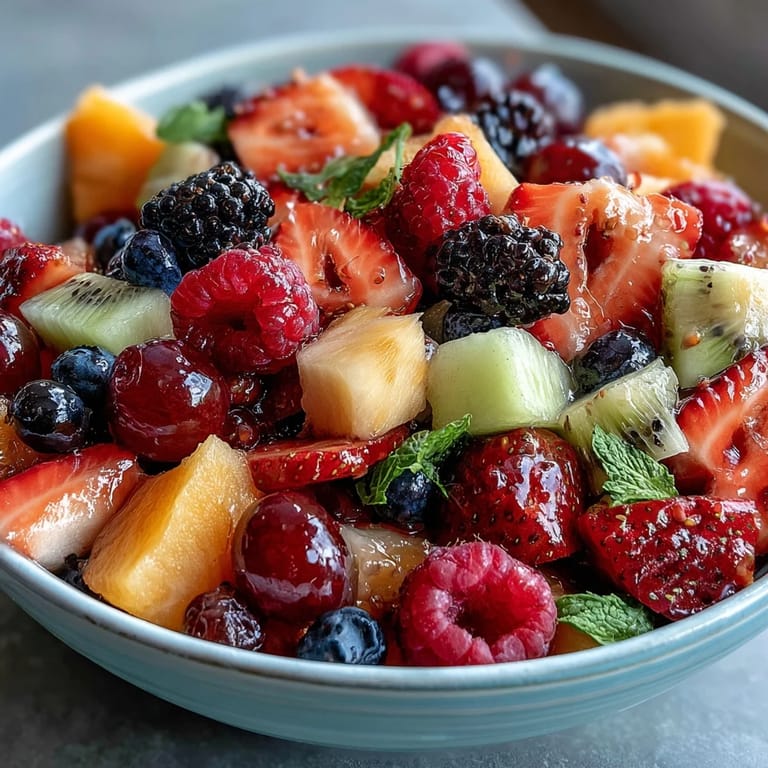
- Start with the largest pieces first, arranging them in loose sections or a gradient pattern—don't overthink it, but do think about color balance. Strawberries next to blueberries, cantaloupe near raspberries, things that make each other sing.
- Tuck and garnish:
- Slip edible flowers and mint leaves into the spaces between fruit clusters like you're adding the final brushstrokes to a painting. They look like accidents but they're absolutely deliberate.
- Add brightness:
- Scatter lemon slices across the top if you're using them—they're both beautiful and practical.
- Chill until showtime:
- Keep everything cold until the moment your guests arrive, or assemble it right before they walk through the door. Fruit waits for no one.
 Save to Pinterest
 After everyone left that graduation party, there were still grapes scattered across the empty board, and instead of feeling wasteful, it felt like evidence that something good had happened. People had lingered, talked, and eaten fruit standing up without thinking about it—which is exactly when you know a table has done its job.
Timing Is Everything
I learned the hard way that you can't assemble this table hours ahead and expect it to look fresh. The moment you cut fruit, it starts its slow descent into sadness—juices pool, colors dull, and edible flowers begin to curl at the edges. Plan to build this table within 30 to 45 minutes before your guests arrive, which sounds tight but actually works in your favor because it forces you to stay present and focused instead of worrying about it all day.
Choosing Flowers That Actually Matter
Edible flowers are where amateurs make their biggest mistake—buying them from the florist section without asking questions or assuming that flowers are flowers. Food-grade edible flowers are grown specifically for consumption without pesticides, and they taste like something (sometimes nothing, but something). Pansies have a gentle sweetness, nasturtiums bring peppery notes, borage tastes vaguely cucumber-like, and marigolds add an almost citrus undertone. Visit a farmers market or specialty grocery store and ask directly; if someone can't tell you where the flowers came from or guarantee they're pesticide-free, don't buy them.
The Board, the Knife, and the Patience
A large wooden board or marble platter transforms this from a bowl of fruit into an actual experience—the surface itself becomes part of the story. A sharp knife matters too because crushed fruit looks tired before anyone takes a bite. I've made this with dull knives and learned that the two extra minutes it takes to hone your blade before starting is worth the difference between fruit that looks intentional and fruit that looks like you gave up halfway through.
- Start with the heaviest, largest fruits first (melons and citrus), then layer in medium fruits (strawberries and pineapple), and finish with delicate berries that roll into the gaps naturally.
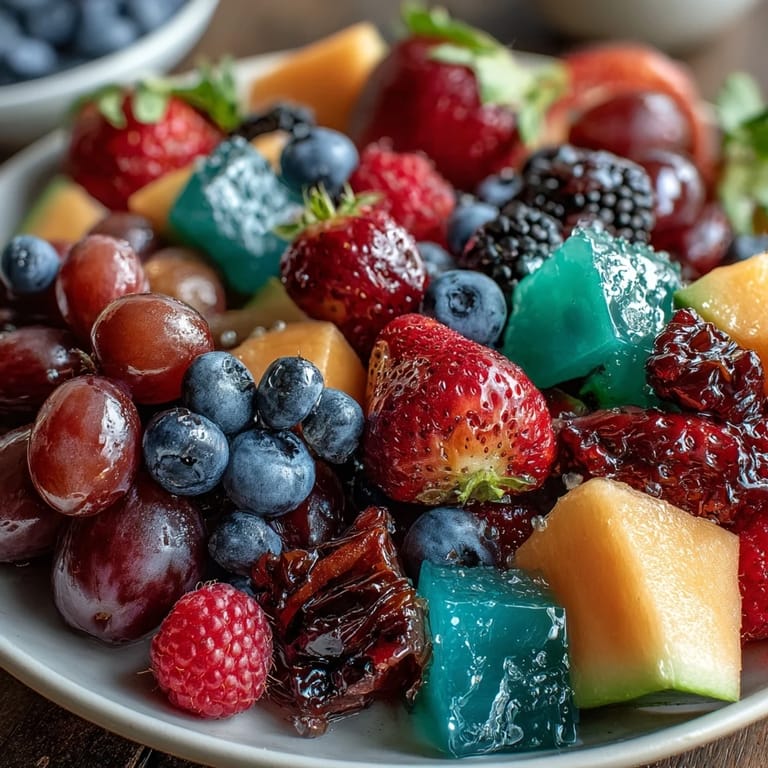
- Leave some negative space—an overstuffed table feels chaotic instead of generous, and your eyes need places to rest.
- Stand back and look at your work from a distance before you're done; what looks balanced up close might feel lopsided from across the room.
 Save to Pinterest
 This isn't really cooking in the traditional sense, but it's the kind of cooking that matters—the kind where you take ordinary things and arrange them with care, and somehow that care translates into joy. Your guests will remember that you made something beautiful for them long after they forget what it tasted like.
Recipe FAQs
- → What kinds of edible flowers are suitable for this display?
Choose food-grade, pesticide-free flowers such as pansies, violas, nasturtiums, marigolds, or borage to ensure safety and bright colors.
- → How should the fruit be prepared for the display?
Wash all fruits thoroughly, cut larger fruits into bite-sized pieces or wedges, and slice softer fruits like strawberries and kiwis for easy serving.
- → How can I keep the display fresh throughout the event?
Keep the fruit table chilled until serving, and arrange fruit shortly before guests arrive to prevent wilting and maintain freshness.
- → Are there suggestions for accompaniments to the fruit table?
Consider offering a side of honey-yogurt dip or a dairy-free coconut dip to complement the fresh flavors without overpowering them.
- → Can different fruits be substituted based on season?
Yes, seasonal fruits like mango, papaya, or cherries can replace or add variety, enhancing both flavor and color.