 Save to Pinterest
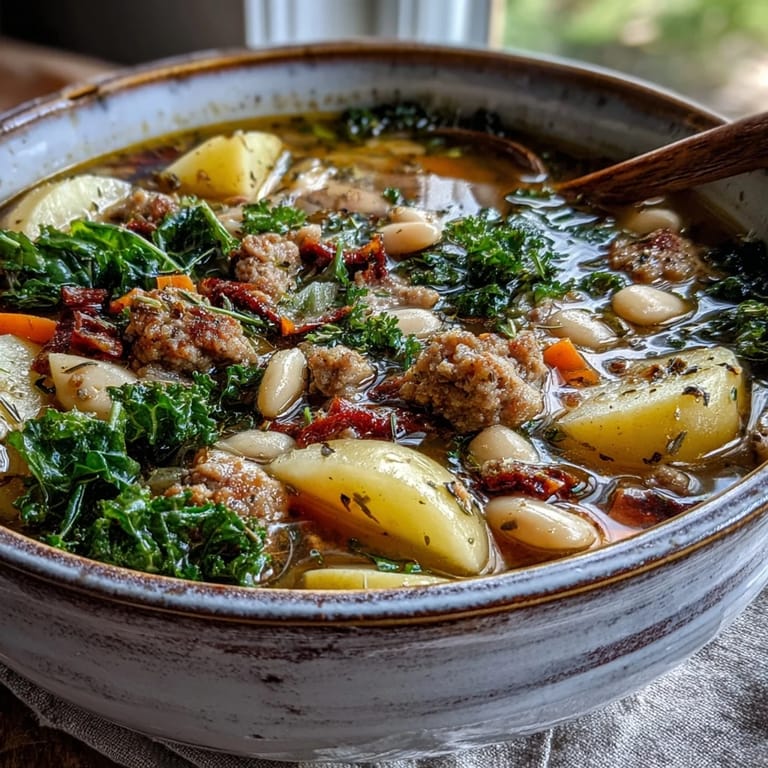
 There's something about a pot of simmering soup that stops time in a kitchen. Years ago, my neighbor Marco brought over this Tuscan soup on a cold October evening, and I watched him work with the ease of someone who'd made it a hundred times. The way the sausage browned first, how the vegetables softened into the fat, the smell that eventually filled the whole house—it felt less like following a recipe and more like watching someone speak in their native language. I've made it countless times since, and it's become my go-to when I want something that tastes like comfort without demanding much fuss.
I made this for my book club one February when everyone was tired of winter. One guest asked for the recipe halfway through her bowl, which felt like the highest compliment. Now it's become what I bring to potlucks when I want people to actually remember the food—not because it's fancy, but because it tastes like someone cared about feeding them well.
Ingredients
- Italian sausage (1 lb): The foundation of this soup's savory depth; I use mild when cooking for varied tastes, but spicy versions create a subtle warmth that lingers through the whole bowl.
- Yellow onion, carrots, and celery: This trio builds flavor from the ground up, and their slow softening is where the magic actually happens—don't rush this step.
- Garlic (3 cloves, minced): Added after the vegetables soften, it prevents bitterness and adds a sweet, fragrant layer that ties everything together.
- Kale (2 cups, chopped): Remove the tough center stems or they'll stay chewy; the leaves will wilt into tender ribbons in just minutes of simmering.
- Yukon Gold potatoes (2 medium): Their waxy texture keeps them from falling apart, and they absorb the broth's flavor without becoming mushy.
- Cannellini beans (2 cans): Always drain and rinse these to remove the starchy liquid, which would make your broth cloudy and dull.
- Chicken broth (6 cups): Low-sodium is essential here because you'll be reducing the liquid slightly and seasoning to taste; you need room to adjust the salt.
- Oregano, basil, and thyme: Dried herbs work beautifully in long-simmered broths; they've taught me that you don't need fresh herbs to create authentic Italian flavor.
- Extra-virgin olive oil and Parmesan: The olive oil adds a grassy finish, while Parmesan at the table lets each person choose their own richness level.
Tired of Takeout? 🥡
Get 10 meals you can make faster than delivery arrives. Seriously.
One email. No spam. Unsubscribe anytime.
Instructions
- Sear the sausage:
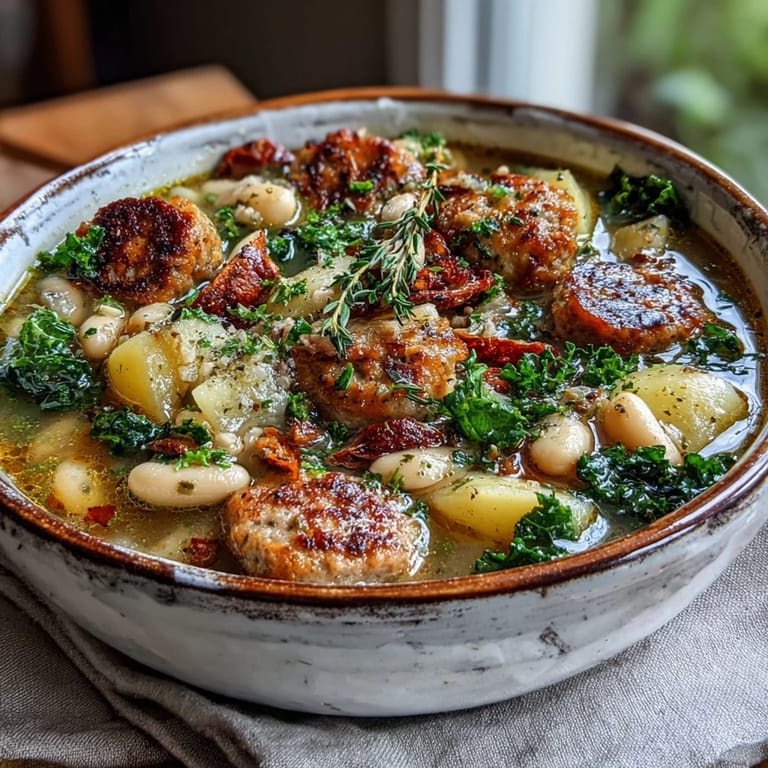
- Pour olive oil into a large pot over medium heat, then crumble the sausage directly in, breaking it into small, uneven pieces with your spoon. You want browning, not uniform chunks—this takes about five to six minutes, and you'll know it's done when there's no pink left and the edges have started to crisp.
- Build the aromatic base:
- Once the sausage is out, those browned bits at the bottom are liquid gold; don't wipe the pot. Toss in diced onion, carrots, and celery, stirring occasionally as they soften over five minutes until they're tender but not colored. Add your minced garlic and let it bloom for just a minute until you can smell its sweet fragrance.
- Combine everything:
- Return the sausage to the pot, then add potatoes, rinsed beans, diced tomatoes if using, chicken broth, and all your dried herbs. Stir once so everything is submerged and the flavors can begin their slow marriage in the simmering liquid.
- Simmer gently:
- Bring to a boil, then immediately drop the heat low, cover, and let it bubble softly for about twenty minutes. The potatoes should be fork-tender but not falling apart; this is when the soup begins to taste like itself rather than just a collection of ingredients.
- Wilt the kale:
- Stir in your chopped kale and simmer uncovered for five to seven minutes—it will seem like a lot of greens until they collapse into tender ribbons. Taste the soup now and season generously with salt and freshly ground black pepper, adjusting the heat with more red pepper flakes if you like a spicy finish.
 Save to Pinterest
 One afternoon, a friend who hadn't cooked in years called me in a small panic, wanting to make something impressive for a date. I walked her through this recipe while she was at the stove, and she kept laughing at how simple it actually was once you started. Two weeks later, she told me she'd made it again for herself, unprompted, because it had become one of those rare recipes that feels like a small victory every time.
The Story Behind This Tuscan Classic
Tuscan white bean soup is rooted in peasant cooking, born from what people had on hand rather than what menus prescribed. The combination of sausage and beans was a way to stretch meat across a pot that fed a whole family or work crew, and the simplicity of the herbs and broth meant nothing interfered with the pure flavors. There's a quiet honesty to this kind of cooking—no pretense, just the understanding that good ingredients, time, and a warm pot create something worth sitting down for.
Texture and Flavor Balance
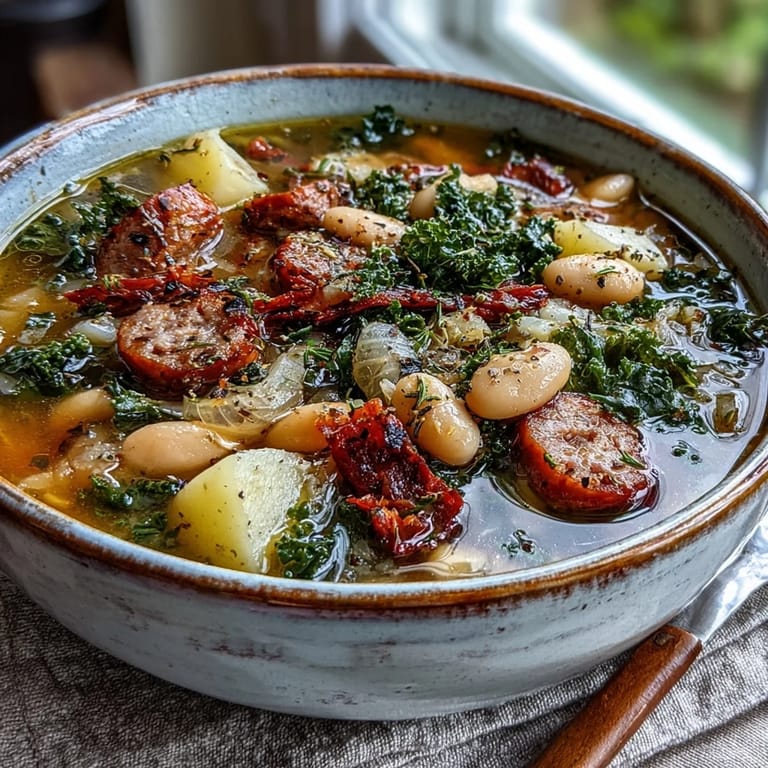
What makes this soup feel complete rather than one-note is the conversation between its textures and tastes. The soft potatoes and beans create creaminess without any cream at all, the sausage brings a salty, slightly spiced richness, and the kale contributes a gentle bitterness that prevents the whole thing from feeling heavy or sweet. The broth ties it all together, and I learned early on that tasting and adjusting as you go matters more than following exact measurements. Everyone's stove runs differently, every batch of ingredients has its own character, and the soup is only truly finished when it tastes right to you.
Serving and Storage Wisdom
Serve this in wide, shallow bowls so the beautiful broth gets its moment, and let guests top their own bowls with Parmesan if they want it. The soup actually tastes better the next day or two, when all the flavors have settled and deepened together, making it a rare dish that improves as leftovers rather than suffering through them. I always encourage people to eat the first bowlful fresh and warm, then look forward to whatever the fridge has created by tomorrow.
- Crusty bread is non-negotiable; it catches every drop of broth and makes you feel like you've accomplished something satisfying.
- A wedge of Parmesan on the table lets people grate their own, which somehow feels more generous than a sprinkle from the kitchen.
- Leftovers reheat beautifully on the stovetop over low heat; add a splash of broth if the soup has thickened beyond what you want.
 Save to Pinterest
 This soup has taught me that the best recipes are the ones you return to because they work, not because they're complicated or trying to impress anyone. It's the kind of dish that invites you back to the kitchen without guilt, knowing you'll create something warm and nourishing that makes people want to stay at your table a little longer.
Recipe FAQs
- → Can I use a different type of sausage?
Yes, you can substitute Italian sausage with turkey sausage, chicken sausage, or plant-based sausage for a lighter or vegetarian option. Choose mild or spicy based on your heat preference.
- → What can I use instead of kale?
Spinach, Swiss chard, or escarole work well as alternatives. Add spinach during the last 2-3 minutes of cooking as it wilts quickly, while chard can be added with the kale.
- → Can I make this soup ahead of time?
Absolutely. This soup tastes even better the next day as flavors meld. Store in an airtight container in the refrigerator for up to 3 days or freeze for up to 3 months.
- → How do I make this soup thicker?
Mash some of the beans against the side of the pot to release their starch, or puree 1-2 cups of the soup and stir it back in. You can also simmer uncovered longer to reduce the liquid.
- → What type of potatoes work best?
Yukon Gold potatoes are ideal for their creamy texture and ability to hold their shape. Russet potatoes can be used but may break down more, creating a thicker broth.
- → Is this soup gluten-free?
It can be gluten-free if you use certified gluten-free sausage and chicken broth. Always check product labels as some sausages and broths contain gluten-based fillers or additives.