 Save to Pinterest
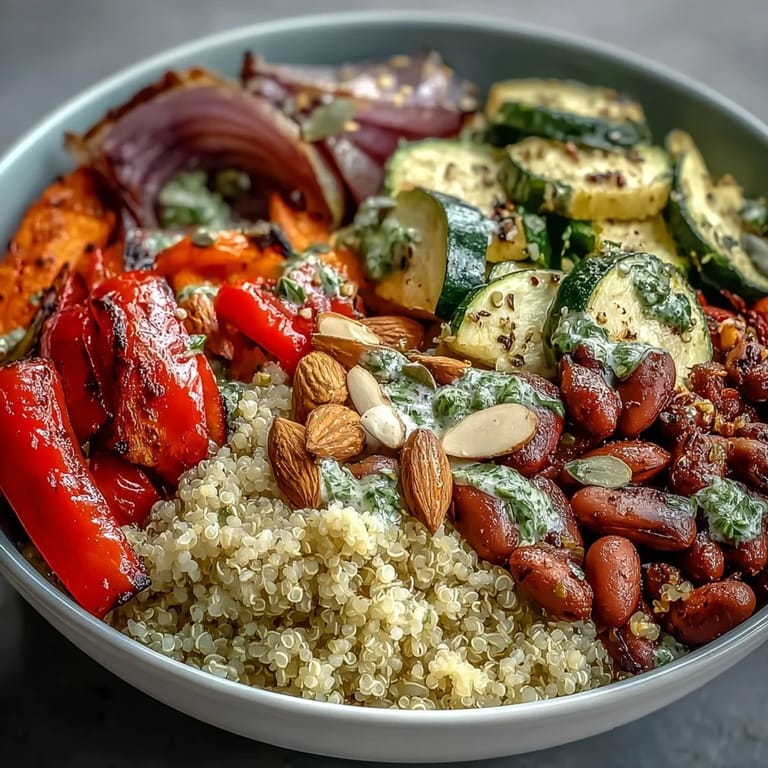
 Last Tuesday, I stood in my kitchen staring at a wilted salad I'd made days earlier, wondering why I kept defaulting to the same tired greens. That's when I decided to build something that wouldn't wilt, wouldn't bore me, and wouldn't require me to think about what to eat for lunch the next three days. This vibrant bowl changed that—it's become my answer to wanting something both nourishing and genuinely exciting to eat.
I made this for my friend Maya when she mentioned feeling perpetually tired on her usual lunch rotation, and watching her perk up after eating it felt oddly rewarding. She came back the next week asking for the recipe, then started making it herself—now it's become our thing, this bowl that somehow makes healthy eating feel less like an obligation and more like a treat.
Ingredients
- Quinoa (1 cup, rinsed): This grain absorbs flavors beautifully and holds its texture better than rice—rinsing removes the bitter coating, which I learned the hard way my first attempt.
- Water or vegetable broth (2 cups): Broth adds subtle depth, but water works fine if that's what you have on hand.
- Red bell pepper (1 medium, diced): The sweetness intensifies when roasted, balancing the earthy notes from everything else.
- Zucchini (1 medium, sliced): Slice it thicker than you think—thin slices turn mushy, thick ones stay firm and develop golden edges.
- Carrot (1 medium, sliced): Cut into similar sized pieces so everything roasts evenly; I learned that unevenly sized vegetables mean some burn while others stay raw.
- Red onion (1 small, cut into wedges): The sharp bite mellows when roasted, becoming almost caramelized and sweet.
- Cherry tomatoes (1 cup, halved): They burst slightly during roasting, creating little pockets of concentrated flavor throughout the bowl.
- Olive oil (2 tablespoons for roasting, 3 for vinaigrette): Quality matters here since you're tasting it raw in the dressing—this is where spending a bit more makes a real difference.
- Dried oregano (1 teaspoon): This herb practically makes roasted vegetables taste like they came from a Mediterranean kitchen.
- Black beans or chickpeas (1 can, drained and rinsed): Rinsing them removes excess sodium and that metallic canned taste—don't skip this step even though it feels small.
- Roasted almonds or walnuts (1/4 cup, roughly chopped): The crunch prevents the bowl from feeling mushy and adds nutritional density that keeps you satisfied longer.
- Pumpkin seeds (2 tablespoons): These add a subtle earthiness and extra protein without overpowering the other flavors.
- Extra virgin olive oil (3 tablespoons for dressing): This is your dressing base, so pick one you actually enjoy the taste of straight.
- Fresh lemon juice (2 tablespoons): Fresh squeezed makes a noticeable difference—bottled tastes a bit flat by comparison.
- Dijon mustard (1 teaspoon): This tiny amount acts as an emulsifier, helping the oil and lemon juice blend together into something creamy without any dairy.
- Maple syrup or honey (1 teaspoon): Just enough to round out the sharp lemon and mustard flavors, creating balance.
- Garlic (1 small clove, minced): Mince it fine so it distributes throughout the dressing evenly instead of hitting you with garlic chunks.
- Salt and black pepper: Taste as you go—the amount depends on whether you're using salted broth and if your beans were canned in salty liquid.
Tired of Takeout? 🥡
Get 10 meals you can make faster than delivery arrives. Seriously.
One email. No spam. Unsubscribe anytime.
Instructions
- Heat your oven and prep your vegetables:
- Set the oven to 425°F (220°C) while you slice and dice everything into roughly similar sizes—this takes about 10 minutes and makes the cooking process feel less rushed. Uneven cuts mean some pieces finish cooking while others are still raw, which you'll notice immediately.
- Toss and roast:
- Spread your vegetables on a baking sheet, drizzle with olive oil, sprinkle on oregano, salt, and pepper, then toss everything together until coated. Pop it in the oven for 20 to 25 minutes, stirring halfway through—this is the moment the kitchen starts smelling incredible.
- Get your quinoa going:
- While vegetables roast, combine rinsed quinoa with water or broth in a saucepan, bring it to a boil, then lower the heat and cover it. Let it simmer for 15 minutes, which is just enough time to check on your vegetables—when the liquid disappears, remove it from heat and let it sit covered for 5 minutes before fluffing it with a fork.
- Make the vinaigrette:
- In a small bowl, whisk together olive oil, lemon juice, Dijon mustard, maple syrup, minced garlic, salt, and pepper until the mixture emulsifies into something that coats the back of a spoon. Taste it and adjust the lemon or salt as needed—this is where you control whether the bowl tastes bright or dull.
- Assemble your bowls:
- Divide quinoa among four bowls, then layer roasted vegetables, beans, nuts, and seeds on top, creating different sections so every bite has a mix of textures. Drizzle the vinaigrette over everything right before eating, or keep it separate if you're making this ahead and storing it—this prevents the bowl from getting soggy.
- Serve and enjoy:
- Eat it warm right away, or refrigerate individual bowls and enjoy them cold over the next few days—honestly, the cold version hits differently on an afternoon when you need something refreshing.
 Save to Pinterest
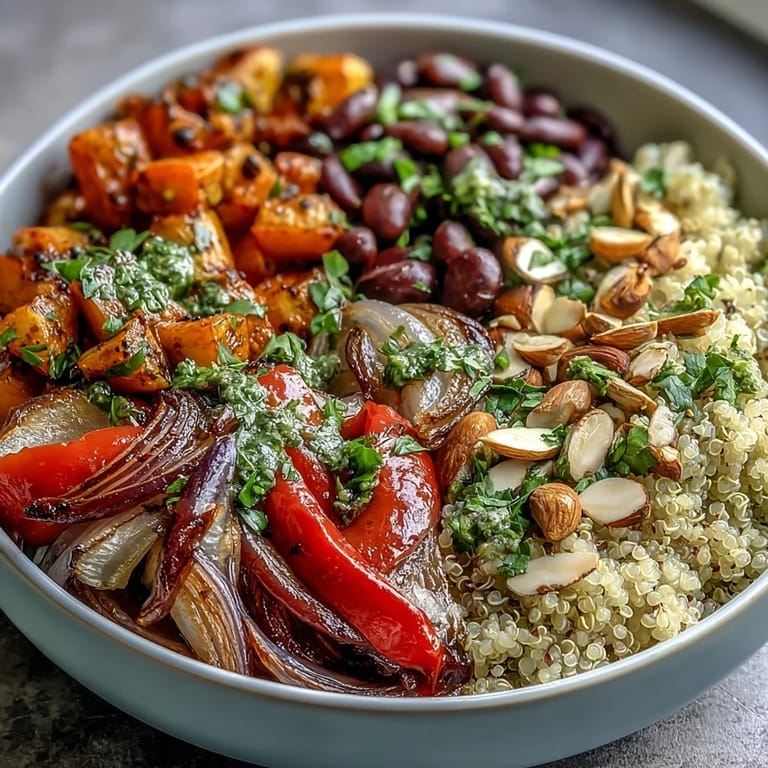
 My sister brought her new partner over for dinner last month, and I made a batch of these bowls because they felt like a good way to show I'd put thought into feeding someone without it feeling stuffy. He asked for the recipe, which might be the highest compliment a home cook can get—not just that the food tasted good, but that it seemed worth learning how to make.
Vegetables That Work Here
The beauty of this bowl is that it adapts to whatever looks good at your market or what you actually have time to chop. In fall I swap in chunks of sweet potato and Brussels sprouts; in spring, I throw in asparagus and new potatoes; mid-summer means fresh corn kernels and green beans—the seasonality keeps it from feeling repetitive even when you make it weekly. The roasting temperature and time stay the same, which means the muscle memory from your first bowl carries straight through to your twentieth.
Protein Additions That Make It Heartier
If the beans and nuts alone don't feel filling enough for your appetite, there are easy ways to push this into even more satisfying territory. A poached egg adds richness and a runny yolk that becomes part of your dressing, grilled tofu soaks up the vinaigrette flavors beautifully, or feta cheese crumbled on top brings a salty tang that makes everything pop—I tend to pick whichever takes the least effort on a given day.
Making This Ahead and Storage
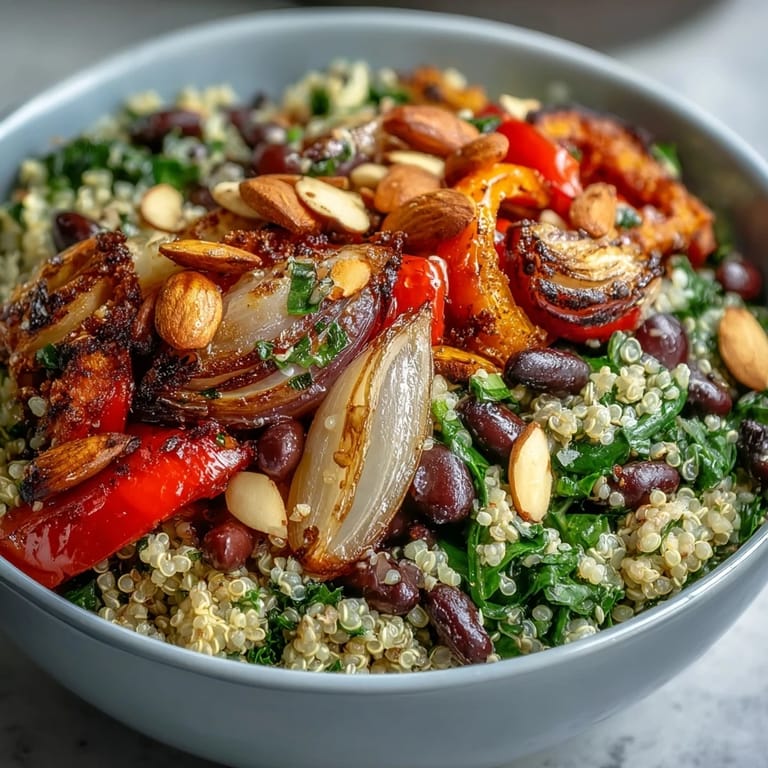
This bowl is one of those rare recipes that actually gets better (or at least doesn't get worse) when you make it in advance—I often spend Sunday evening assembling four bowls, stacking them in the fridge, and then eating one for lunch each day, with the dressing in a separate container. The vegetables soften slightly, the quinoa absorbs the flavors around it, and by Wednesday you're eating something that tastes intentional rather than just leftovers. Keep the nuts separate until you eat it, though, or they'll go soggy from the dressing.
- Store assembled bowls in airtight containers for up to 4 days, keeping dressing separate until right before eating.
- If you're making this vegan, use maple syrup in the dressing instead of honey—it whisks in just as smoothly.
- Cold bowls straight from the fridge are genuinely wonderful; you don't have to reheat anything if you don't want to.
 Save to Pinterest
 This bowl taught me that eating well doesn't have to mean denying yourself delicious flavors or spending hours in the kitchen—it just means paying attention to what makes each component shine. Now it's my answer to almost every question about what's for lunch, and somehow I'm never bored.
Recipe FAQs
- → Can I use other grains instead of quinoa?
Absolutely. Brown rice, farro, bulgur, or couscous work beautifully. Adjust cooking time according to grain package directions.
- → How long do leftovers keep?
Store assembled bowls in airtight containers for up to 4 days. Keep vinaigrette separate and add just before serving to maintain freshness.
- → Can I make this vegan?
Yes. Simply swap honey for maple syrup in the vinaigrette. The rest of the ingredients are naturally plant-based.
- → What vegetables work best for roasting?
Sweet potatoes, broccoli, cauliflower, Brussels sprouts, and eggplant all roast beautifully alongside the suggested vegetables. Use whatever is in season.
- → Can I add protein?
Grilled tofu, poached eggs, shredded chicken, or roasted chickpeas make excellent protein additions while complementing the existing flavors.
- → Is the vinaigrette necessary?
The lemon vinaigrette provides essential brightness that ties the components together. A simple olive oil and acid blend works as a quick alternative.